


In an era defined by rapid technological advancement, artificial intelligence (AI) and data science are reshaping industries, economies, and societal norms at an unprecedented pace. The digital transformation spurred by AI-driven innovations introduces transformative potential and profound ethical implications. This article…
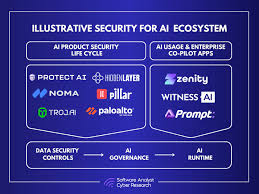
Securing AI Innovation: Enterprise Strategies for LLM and Generative AI Security
The adoption of Large Language Models (LLMs) and Generative AI is revolutionizing enterprise operations, delivering unmatched innovation, efficiency, and competitive advantage. However, this rapid integration brings significant AI security challenges that organizations must address. Insights from Qualys show that over 1,255…
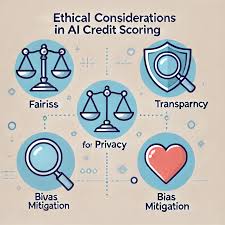
AI and Credit Scoring: Assessing the Fairness and Transparency of Machine Learning Models in Lending Decisions
The rapid adoption of artificial intelligence (AI) in financial services has revolutionized credit scoring, enhancing efficiency and predictive accuracy in lending decisions. Machine learning (ML) models are now widely used to evaluate creditworthiness by analyzing vast amounts of data, including traditional…

From Black Box to Glass Box: Why Explainability Is Critical in AI
As artificial intelligence continues to shape decisions in healthcare, finance, criminal justice, and beyond, the need for transparency has never been more urgent. Many AI models, particularly deep learning systems, are often criticized as “black boxes”—they produce outputs without offering insights…
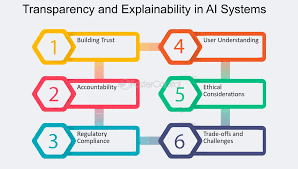
Explainable AI in Credit Scoring: Improving Transparency and Accountability
The use of Artificial Intelligence (AI) in credit scoring has revolutionized decision-making in the financial sector, offering efficiency and predictive accuracy. However, the opacity of AI models, particularly those based on machine learning, poses significant challenges related to transparency and accountability….
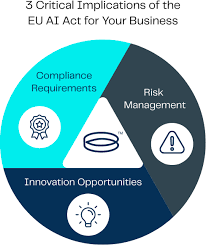
How the EU AI Act Is Reshaping the Global Ethics Landscape
In an era where artificial intelligence is rapidly advancing, governments across the world are grappling with how to regulate its development and deployment responsibly. Leading the charge is the European Union, whose recently enacted EU AI Act is setting a precedent…

India’s AI Governance Guidelines Report: A Medley of Approaches
Shortly after the Indian Ministry for Electronics and Information Technology released a draft of the long-awaited Digital Personal Data Protection Rules, 2025, it also released a report on ‘AI Governance Guidelines Development’ by a subcommittee constituted under the Advisory Group for…
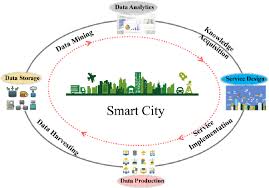
The Future of Ethical AI in Smart Cities and Urban Governance
As cities become more connected and technologically advanced, the integration of AI in smart cities is reshaping the way urban spaces function. From traffic management and energy optimization to predictive policing and citizen engagement, artificial intelligence is central to this transformation….

The Future Of AI In Zero-Trust Architecture And Data Regulations
In the rapidly evolving landscape of cybersecurity, zero-trust architecture has emerged as a critical framework for protecting digital assets and sensitive information. As organizations struggle with increasingly sophisticated cyber threats and stringent data protection regulations, integrating artificial intelligence (AI) into zero-trust…

SovereignGuard: How Nations Can Enforce Digital AI Sovereignty
In an era where artificial intelligence (AI) is reshaping economies, security systems, and cultural identities, nations face an urgent imperative: safeguarding their digital autonomy. Enter the concept of AI sovereignty—the ability of a country to independently develop, deploy, and regulate AI…